
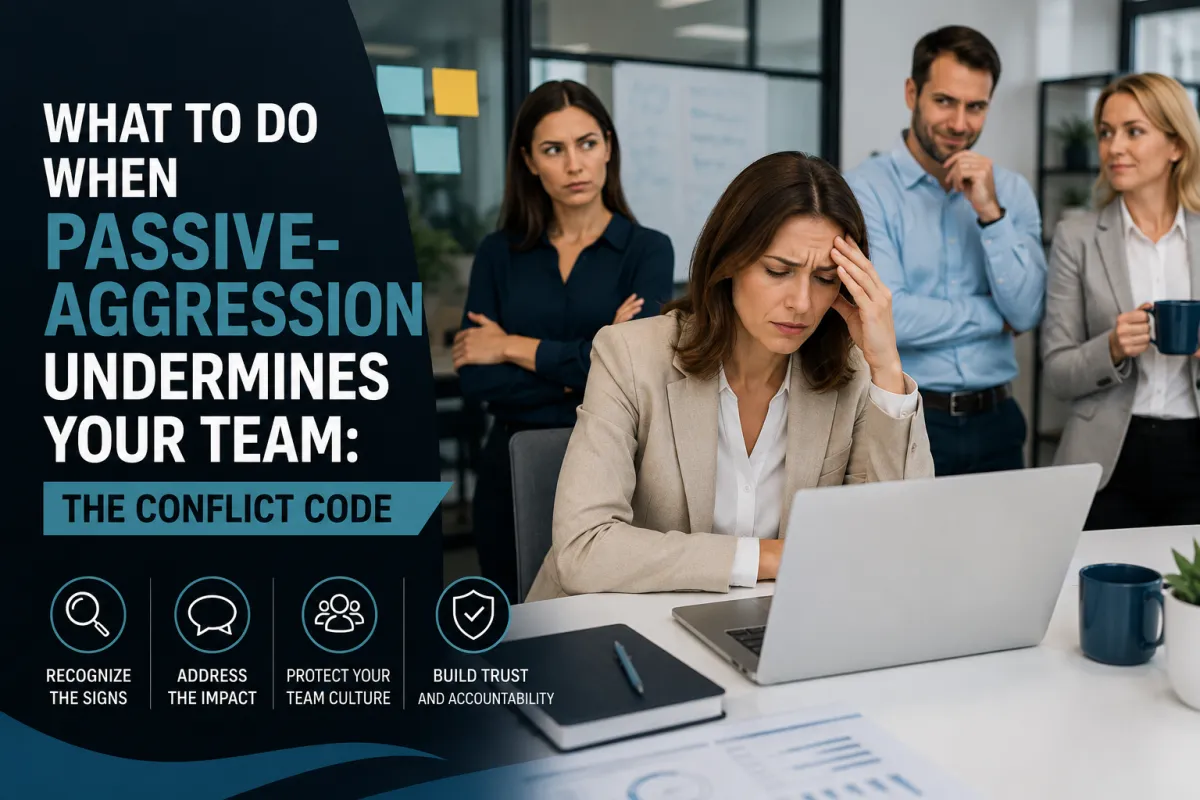
What to Do When Passive-Aggression Undermines Your Team: The Conflict Code

Learn to effectively engage with passive-aggressive team members and transform workplace morale, fostering a more productive and respectful environment.
Your team meeting is underway, and Sarah, a key contributor, is visibly disengaged. She rolls her eyes when a new idea is proposed, offers one-word answers, and sighs loudly during discussions. Later, you notice subtle undermining of decisions made in the meeting, creating a ripple effect of tension and distrust among colleagues. This isn't outright defiance, but a constant, low-level drain on energy and productivity that leaves everyone walking on eggshells.
Why Passive-Aggression Is So Damaging
Passive-aggression, while often subtle, inflicts significant professional and personal costs. Professionally, it erodes trust, stifles open communication, and creates a toxic environment where innovation and collaboration struggle to thrive. Projects slow down, deadlines are missed, and team cohesion fractures. Personally, it leads to increased stress, frustration, and burnout for everyone involved. You might find yourself constantly second-guessing interactions, feeling unheard, and struggling to maintain your own positive outlook amidst the negativity. The unspoken resentment festers, impacting not just the team's output but also individual well-being and career growth.

The FORGE Framework Applied: Engage
When faced with passive-aggression, the "E" in FORGE—Engage—becomes your most powerful tool. As a Grounded Diplomat, your strength lies in your ability to approach difficult conversations with calm and strategic intent, seeking understanding and resolution rather than confrontation. Engaging means stepping into the discomfort, not avoiding it, and doing so with a clear purpose.
"Engagement isn't about winning an argument; it's about opening a channel for genuine understanding and collaborative problem-solving."
To effectively Engage with a passive-aggressive team member, consider these steps:
1. Choose the Right Time and Place: Schedule a private, one-on-one conversation. Avoid impromptu discussions in public spaces or when emotions are high.
2. State Observations, Not Accusations: Focus on specific behaviors and their impact. "I've noticed that during team meetings, you often sigh when others speak, and your contributions have been brief. This seems to be affecting the team's energy." Avoid "You are passive-aggressive."
3. Express Impact: Clearly articulate how their actions affect you, the team, or the project. "When I see eye rolls or hear sighs, I worry that you're not fully on board, and it makes others hesitant to share ideas."
4. Invite Dialogue: Create space for them to respond without judgment. "Can you help me understand what's going on for you?" or "Is there something I'm missing?"
5. Listen Actively: Be prepared to hear their perspective, even if it's difficult. Look for underlying concerns, frustrations, or unmet needs that might be manifesting as passive-aggression.
6. Collaborate on Solutions: Once you understand their perspective, work together to find constructive ways forward. "What could we do differently in meetings to ensure your voice is heard and your concerns are addressed more directly?"
What Changes
By choosing to Engage, you shift from being a victim of passive-aggression to an active leader shaping your team's dynamics. Before, you might have felt helpless, watching morale decline and productivity suffer. After, you gain clarity, open lines of communication, and empower your team member to address their concerns constructively. Imagine a scenario where, after your thoughtful engagement, Sarah begins to voice her disagreements directly and offers solutions instead of subtle resistance. The tension dissipates, team members feel more secure, and collaborative energy returns. A leader who once felt drained by unspoken conflict now sees a path to resolution, transforming a challenging dynamic into an opportunity for growth and stronger team bonds.
The Longer Game
Mastering the art of engaging with passive-aggression is more than just resolving a single conflict; it's a profound step in your leadership identity transformation. It cultivates resilience, sharpens your emotional intelligence, and reinforces your ability to lead with empathy and strength. Each successful engagement builds your capacity to navigate complex human dynamics, fostering a culture of psychological safety and direct communication. This skill set is invaluable, preparing you to tackle even greater leadership challenges and inspire a truly high-performing team.
Ready to Transform Your Conflict Approach?
Understanding your natural conflict tendencies is the first step toward mastering them. Discover your unique conflict style and unlock personalized strategies for more effective communication and resolution. Take the free Conflict Style Quiz today HERE and start your journey to becoming a more confident and impactful leader.






Facebook
Instagram
LinkedIn