
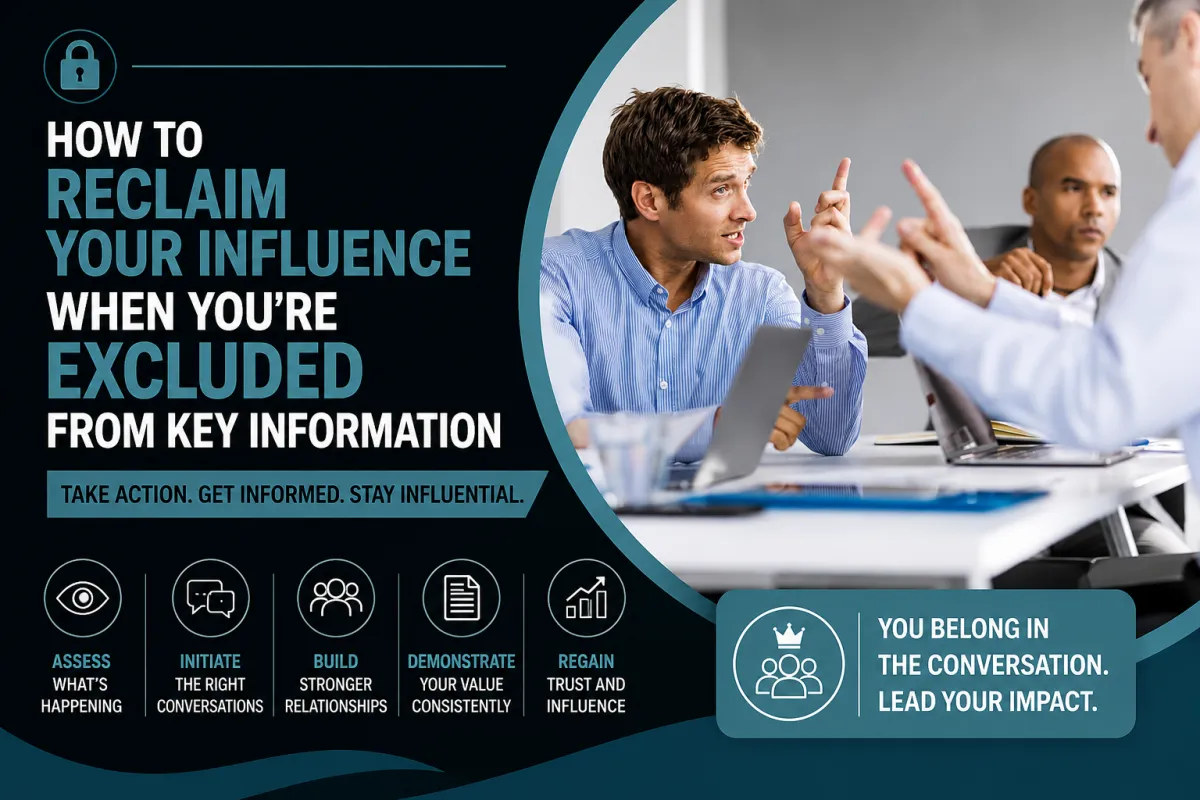
How to Reclaim Your Influence When You're Excluded from Key Information

The Silent Cost of Being Excluded
You walk into the office, grab your coffee, and settle in, only to discover a critical decision was made in a meeting you weren't invited to. Again. The whispers start, the assumptions build, and suddenly, you're on the outside looking in, wondering if your contributions still matter. This isn't just a minor oversight; it's a slow, painful erosion of your professional standing and personal confidence.
Being consistently excluded from key meetings, decisions, or information loops isn't just frustrating; it's professionally debilitating. You miss opportunities to contribute, your projects suffer from lack of critical context, and your career trajectory can stall. Personally, it breeds self-doubt, resentment, and a sense of being undervalued, impacting your overall well-being and engagement.
The FORGE Framework Applied: Engage to Reclaim Your Seat at the Table
When exclusion becomes a pattern, it's easy to retreat or lash out. Neither serves your long-term goals. Instead, the FORGE Framework offers a strategic path to re-engage and demonstrate your indispensable value, regardless of your primary conflict style.
F - Focus: Clarify Your Intent
Before you act, get clear on your objective. Is it to be included in every meeting, or to ensure your insights are heard and considered? Your goal isn't just inclusion; it's impact. Focus on what you need to contribute effectively and why your presence or input is crucial.
Power Phrase: "My intention is to ensure our team benefits from a complete perspective, and I believe my insights are critical to achieving that."
O - Observe: Gather the Facts, Not Just Feelings
Resist the urge to jump to conclusions. Instead, objectively observe the patterns. Who is included? Who isn't? What types of decisions are being made without you? Are there specific projects or topics where your exclusion is most pronounced? Look for data points, not just emotional reactions.
R - Reflect: Understand Your Role and Reactions
Consider your own contributions to the dynamic. Have you been less vocal recently? Have you inadvertently signaled disinterest? Reflect on how your conflict style (whether you tend to accommodate, avoid, or compete) might be influencing the situation and your response. How can you shift your approach to be more assertive and collaborative?
G - Generate: Craft Strategic Options
Brainstorm multiple ways to address the exclusion. This isn't about confrontation, but about strategic re-engagement. Options might include: scheduling one-on-one check-ins with key decision-makers, proactively sharing relevant information, asking for specific agenda items, or proposing a new communication protocol for your team. Consider how each conflict style might approach this, and choose a balanced path.
E - Engage: Act with Purpose and Professionalism
This is where you put your plan into action. Choose a low-stakes opportunity to initiate a conversation. Frame it around collaboration and shared success, not accusation. For example, instead of saying, "Why wasn't I invited?" try, "I noticed X decision was made, and I have some insights from Y project that I believe could add value. How can I ensure I'm looped in on similar discussions moving forward?" This demonstrates your commitment to the team's success and your desire to contribute.

Power Phrase: "How can I best contribute to ensure we achieve the strongest possible outcome?"
What Changes: From Sidelined to Strategic Partner
Before applying the FORGE Framework, you felt invisible, frustrated, and increasingly disengaged. Your work suffered from a lack of critical information, and your confidence dwindled. You might have even considered looking for another role, feeling your contributions were no longer valued.
After strategically engaging, you shift from being a passive recipient of exclusion to an active architect of your involvement. You regain clarity on your value, proactively seek out necessary information, and re-establish yourself as a vital contributor. Your colleagues begin to see you not as someone to be overlooked, but as a strategic partner whose input is essential.
Consider Sarah, a marketing manager who found herself consistently left out of product development meetings, despite her team being responsible for launching new features. Initially, she felt hurt and resentful. Applying FORGE, she Focused on her goal: to ensure marketing insights were integrated early. She Observed that engineering leads were making decisions without understanding market implications. She Reflected on her own tendency to avoid direct conflict. She Generated options, including a weekly informal sync with the product lead. When she Engaged, she framed it as a way to proactively align marketing and product, benefiting both teams. Within weeks, she was invited to key discussions, and her input was actively sought, transforming her role from an afterthought to an indispensable voice.
The Longer Game: Cultivating Inclusive Leadership
Addressing workplace exclusion isn't just about getting invited to meetings; it's about cultivating a leadership identity that fosters inclusion and mutual respect. By mastering the FORGE Framework, you not only reclaim your own influence but also model proactive communication and strategic engagement for others. You become a leader who doesn't wait to be invited but creates the invitation through demonstrated value and collaborative intent. This journey transforms you into a more resilient, influential, and ultimately, a more inclusive leader.
Ready to Transform Your Conflict Approach?
Understanding your natural conflict style is the first step toward mastering workplace dynamics and ensuring your voice is heard. Take the free Conflict Style Quiz today to uncover your primary style and gain personalized insights into how you can better navigate challenging situations and foster more inclusive environments.
[Take the Conflict Style Quiz Now!](https://conflictstylequiz.com)






Facebook
Instagram
LinkedIn