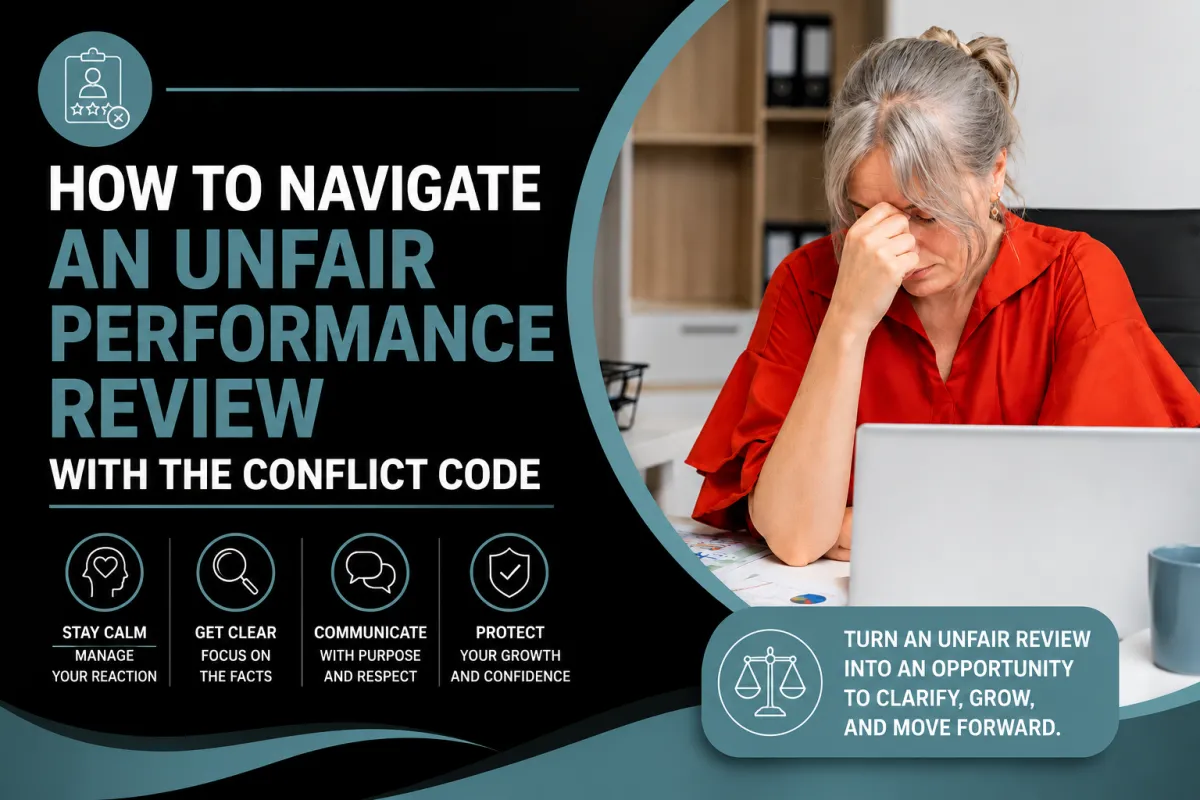
How to Navigate an Unfair Performance Review with The Conflict Code

Feeling blindsided by your performance review can derail your career and crush your confidence. Learn how to transform this challenging conversation into an opportunity for growth and clarity using The Conflict Code.
Why an Unfair Performance Review is So Damaging
Imagine pouring your energy into your work, only to be met with feedback that feels inaccurate, unfair, or entirely new. This isn't just a minor setback; it's a significant blow to your professional identity and future. When your contributions are overlooked or misrepresented, it can lead to deep frustration, resentment, and a sense of powerlessness. Personally, it erodes your self-worth and can make you question your capabilities. Professionally, it can impact your opportunities for advancement, salary negotiations, and even your standing within the organization. The cost isn't just emotional; it's tangible, affecting your career trajectory and financial well-being.
The FORGE Framework Applied
Navigating an unfair performance review requires a strategic approach. The Conflict Code's FORGE Framework provides a clear path to transform this difficult situation into a constructive dialogue.
F = Focus: Clarify Your Intent
Before you react, Focus on your desired outcome. Is it to correct inaccuracies, understand the feedback better, or advocate for your contributions? Your intent shapes your approach.
"Clarity of intent transforms confrontation into constructive conversation."
O = Observe: Gather the Facts
Observe the specific points of contention. What exactly was said? What data or examples were provided (or conspicuously absent)? Document everything. This isn't about accusation; it's about objective data collection.
R = Reflect: Understand Your Perspective and Theirs
Reflect on your own performance and the feedback received. Where do you agree, and where do you disagree? Crucially, try to understand the other person's perspective. What might be driving their assessment? This step is about empathy and self-awareness.
G = Generate: Brainstorm Solutions and Strategies
Now, Generate potential solutions and strategies. How can you address the feedback constructively? What information can you bring to the table? What questions can you ask to gain clarity? This is where you proactively shape the narrative.
E = Engage: Initiate a Strategic Conversation
Finally, Engage in a structured conversation. Present your observations and reflections calmly, ask clarifying questions, and propose your generated solutions. This isn't a debate; it's a dialogue aimed at mutual understanding and resolution.
What Changes
By applying the FORGE Framework, you shift from a reactive, defensive stance to a proactive, strategic one. Instead of feeling victimized, you become an active participant in shaping your professional narrative. Consider Sarah, a marketing manager who felt her review unfairly criticized her leadership skills. Instead of stewing, she used FORGE. She focused on understanding the specific examples, reflected on her team's dynamics, generated a plan to solicit more direct feedback, and engaged her manager in a follow-up meeting. The outcome? Her manager appreciated her mature approach, clarified some misunderstandings, and together they developed a clear action plan for her growth. Sarah not only corrected the record but also strengthened her relationship with her manager and demonstrated her leadership potential.

The Longer Game
Successfully navigating an unfair performance review isn't just about resolving a single incident; it's about cultivating your leadership identity. Each time you apply the FORGE Framework, you hone your ability to handle difficult conversations with grace, clarity, and strategic intent. This builds resilience, enhances your reputation as a thoughtful communicator, and positions you as a leader who can transform conflict into opportunity. It's a crucial step in mastering The Conflict Code and designing your success.
Ready to Master Conflict and Elevate Your Leadership?
Mastering conflict is about aligning your self-image with your desired leadership style. It is about building "firewalls" that prevent conflict from escalating and learning the strategic power phrases that give you clarity in tense moments.
Ready to discover your default approach to workplace friction?Take the free "What's Your Conflict Style?" Quiz today to uncover your unique strengths and growth edges.
By understanding your baseline, you can begin applying the FORGE Framework to master the art of productive discomfort and elevate your career.






Facebook
Instagram
LinkedIn